

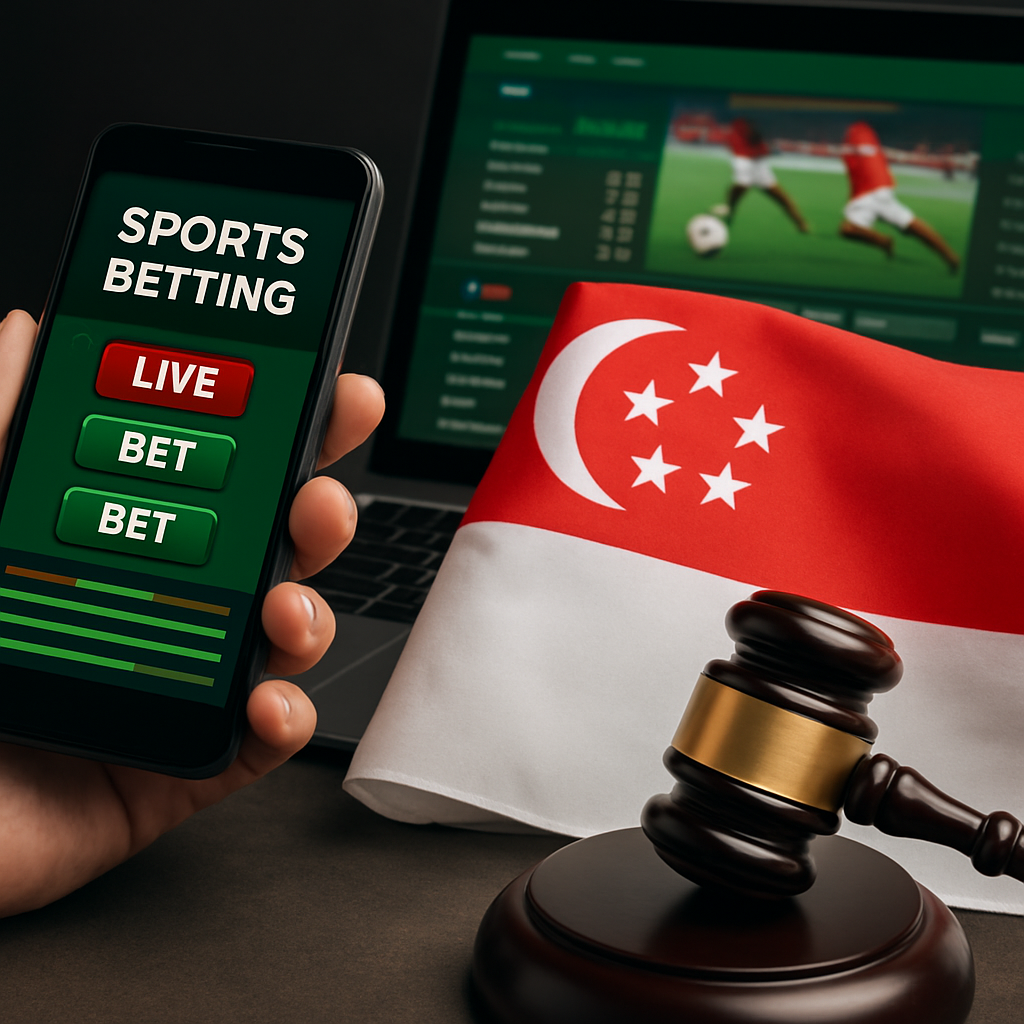
Legal Status of Online Betting in Singapore: What Punters Need to Know Before They Bet
Understanding the legal status of online betting in Singapore is essential for anyone who wagers on sports, esports or casino games from here. This article breaks down the Remote Gambling Act framework, who is lawfully exempt, how enforcement actions affect payments and account access, and the practical risks when using offshore platforms such as GGLBET. You will also get a step-by-step site verification checklist, concrete steps to reduce payment and dispute risk, and authoritative sources to monitor before you bet.
How Singapore Law Regulates Remote Online Betting
Core rule: the Remote Gambling Act 2014 makes providing or facilitating remote gambling into Singapore a statutory offence, with only narrowly defined exemptions for designated local operators. See the legislation at Singapore Statutes Online and the Gambling Regulatory Authority summaries at GRA.
Enforcement tools and how they affect bettors
- Payment channel orders: authorities can direct banks and payment service providers to block transactions to specific operators, which in practice causes deposit or withdrawal failures for customers.
- ISP and domain actions: regulators can require ISPs or registries to block domains or IPs, creating access problems even when a site remains online via alternative mirrors.
- Asset restraints and prosecution: when providers target Singapore customers, asset freezes and criminal charges against operators or facilitators are tools regulators use to remove the service.
- Administrative directions to intermediaries: this includes pressure on app stores, advertising networks, and advertising platforms to cut marketing that targets local users.
Practical insight: enforcement focuses on disrupting the business model of operators rather than mass prosecution of casual bettors. That reduces the likelihood of criminal charges for most players but increases the chance of payment disruption and zero legal leverage when disputes arise.
Tradeoff to accept: using an offshore site may deliver better UX, markets, or odds, but those benefits come with weaker consumer protections, foreign dispute procedures, and the realistic possibility that banks or PSPs will decline or reverse transactions.
Concrete example: GGLBET operates under Green Stream Technology B.V. with a Curacao eGaming licence and markets in SGD. Because it does not hold a Singapore exemption, regulators can and have used payment and domain controls that create withdrawal delays and interrupted service for Singapore customers; in such a case, dispute resolution will be governed by the operator jurisdiction and not Singapore law.
Important: a Curacao licence does not equal legal status in Singapore. Licensing under foreign law grants no Singapore regulatory protection or exemption.
Judgment: many readers assume legality follows availability. That is incorrect. Accessibility of an offshore site from Singapore does not make it lawful, and the predictable regulatory response is to cut revenue and access channels rather than to run consumer compensation schemes.
What the Law Means Practically for Singapore Punters
Immediate reality: for most Singapore punters the Remote Gambling Act rarely produces prosecutions, but it does produce friction where it matters — money movement, access, and legal remedy. Operators that are not exempt can be made commercially nonviable by regulators, and the pressure falls on payment rails and customers.
What you will actually experience
Expect three operational effects more often than courtroom cases: deposit and withdrawal interruptions, bank or PSP refusals, and limited domestic dispute options. These are administrative outcomes: regulators instruct banks, payment service providers, app stores, and DNS registries to cut channels. That stops revenue to providers and, in practice, locks customers out of funds or slows payouts while providers re-route or impose stricter withdrawal checks.
- Payment friction: card or ewallet deposits may be declined without a legal notice to the punter; chargebacks are less likely to succeed if the merchant is in a gambling merchant category.
- Access friction: a site can remain reachable via mirrors or VPNs but your bank and local app stores can still block payments and app installs.
- Dispute friction: customer support promises mean little when terms place jurisdiction offshore; Singapore authorities cannot compel a foreign operator to release funds.
Tradeoff to accept: better markets or promotions on offshore sites come with weaker enforcement accountability. If your priority is certainty of access and legal recourse, that advantage is often a mirage; if your priority is market depth and odds, be prepared to manage payment and dispute risk yourself.
Concrete example: a Singapore bettor deposits SGD by card to an offshore platform such as GGLBET and later requests a withdrawal. After a regulator issues a payment channel direction, the bank flags the operator and the withdrawal is delayed while the operator requests enhanced KYC and routing changes. The customer sits in a 2 to 6 week window of back-and-forth where the operator cites offshore jurisdiction and the bank declines immediate chargeback assistance.
A practical limitation many punters miss is timing. Enforcement actions move faster than dispute processes. You can lose immediate access to funds within days, but recovering money through overseas courts or foreign regulators can take months and is rarely cost effective for small sums.
Practical judgment: treat offshore licensing as an operational indicator, not a substitute for Singapore legal status. A Curacao licence shows the platform operates under Curacao law, but it does not prevent Singapore regulators from disrupting payments or access — and it does not create local consumer protection.
If you want to reduce downside without abandoning offshore options, test the platform with a small deposit, use payment methods with clear dispute routes, and document every transaction. See the Gambling Regulatory Authority for official notices at GRA and check operator jurisdictional statements and payout terms before larger deposits. For practical deposit guidance specific to SGD, consult internal resources such as How to deposit with SGD.
How to Verify an Online Betting Site from a Singapore Perspective
Start with jurisdiction, not presentation. A polished interface and SSL padlock prove only that a site is live and encrypted; they do not prove lawful access for Singapore customers or meaningful local protections.
Practical verification checklist
- Confirm the legal entity and regulator: find the corporate name and licence number in the site footer or terms, then verify that licence on the regulator portal such as Curacao eGaming. If the regulator record does not match the site claims, treat the operator as high risk.
- Read the jurisdiction and disputes clause: check which courts govern disputes and where enforcement is expected to occur. If the site insists on an offshore forum and waives local rights, that limits your remedy options in Singapore.
- Examine payment rails and withdrawal policy: list accepted deposit and withdrawal methods, minimum and maximums, fees, and documented processing times. If only exotic crypto channels are available, expect faster operations but weaker dispute options.
- Check KYC and AML practises in the T C: look for specific identity documents required, reasons for forced hold on withdrawals, and thresholds that trigger enhanced checks. Vague KYC promises are a red flag.
- Verify marketing and localisation signals: sites that overtly market in SGD, local promotions, or Singapore payment options may be targeting local customers. That increases regulatory risk for the operator and practical friction for you.
- Use technical checks: run a
WHOISlookup and check domain age and registrar, confirm TLS certificate owner, and search for historical domain changes. Rapid ownership shifts or anonymised WHOIS often indicate churn or sink sites. - Cross check independent reputational sources: look for consistent complaints and verified payout issues on multiple review platforms. One-off negative reviews are normal; repeated, specific payout complaints are not.
- Plan a staged test: deposit a small amount first, request a small withdrawal, and save all receipts and chat transcripts. Testing reduces exposure and produces evidence if escalation becomes necessary.
Concrete example: On a platform such as GGLBET you would locate the corporate footer showing Green Stream Technology B.V., note the Curacao licence claim, then confirm that licence record on Curacao eGaming. Next, open the T C to see whether Singapore law is excluded, check whether SGD deposits are treated as local merchant transactions, and perform a micro deposit to verify payout behaviour before funding larger sums.
Tradeoff and limitation: exhaustive verification reduces risk but never eliminates it. Even an operator with a valid foreign licence can be subject to payment interruptions ordered by Singapore authorities. Verifying jurisdiction and payment routes narrows your exposure to operational risk but does not create legal immunity.
Key point: validate licence records offsite and test a small deposit before committing funds.
Next consideration: after verification, monitor the operator against GRA advisories and local payment news. Verification is not a one time task because enforcement actions and payment channel listings can change quickly.
Specific Risks When Using Offshore Platforms like GGLBET
Top-line risk: offshore platforms can look and feel professional but place you outside Singapore protective rails — that gap creates multiple distinct failure modes you will see in practice, not hypotheticals.
Operational, financial and trust failures to expect
- Payment derailment: banks or payment processors may flag or block merchant flows linked to an offshore operator, producing silent charge declines, reversed transactions, or long holds while the money is investigated.
- Account suspension or selective withholding: operators commonly use broad T C clauses and enhanced KYC triggers to freeze accounts after large wins or perceived bonus abuse; reversing those freezes from Singapore is difficult.
- Weak consumer remedies: dispute resolution is usually governed by an overseas forum and informal complaint channels; even a valid judgement abroad is expensive and slow to enforce locally.
- Opaque payout plumbing: some offshore sites route SGD through intermediary merchants or aggregator PSPs. That makes chargebacks harder and produces receipts that hide the true operator, complicating any escalation with your bank.
- Integrity and audit uncertainty: not all offshore licences require the same RNG or game-audit standards. That raises real risk for casino products and virtual markets where independent verification is weak or nontransparent.
- Privacy and identity exposure: handing sensitive KYC documents to a foreign operator with different data protections increases identity theft and data-breach risk — especially where recovery options are limited.
Practical tradeoff: faster markets, exotic bets, or generous promotions can feel attractive, but the counterweight is operational fragility. If you prize certainty of access to funds and legal recourse, those offshore advantages are frequently illusory.
Concrete example: A Singapore punter places a large esports parlay on GGLBET. After the bet wins, the operator flags the account under a bonus and suspicious-activity clause, requests additional ID and bank statements, and delays payout while routing the case to offshore arbitration. The bettor's card issuer declines a chargeback because the merchant category is gambling; weeks pass while the operator demands more documentation and cites its terms as authority.
Judgment: many customers assume a foreign licence equals consumer safety. In practice, licensing abroad mainly governs the operator's home obligations — it does not stop Singapore regulators from disrupting payment rails nor does it guarantee transparent dispute resolution for local users. Treat foreign licensing as an operational signal, not as equivalent to local regulation.
Check this before staking meaningful sums: confirm the operator's stated payout processor on receipts and match it to the licence record on Curacao eGaming or other regulator portals; if the merchant name differs, walk away or limit exposure.
Practical Steps for Safer Betting and Harm Minimization
Start with damage control, not optimism. If you intend to use offshore platforms, focus first on reducing personal financial and legal exposure: separate bankrolls, documented transactions, and clear escalation paths beat wishful thinking about promotions.
Concrete operational steps
- Isolate funds: open a dedicated bank account or prepaid card solely for wagering. Trade-off: it adds friction and a small cost, but it protects household finances and simplifies a bank dispute if one arises.
- Choose traceable payment rails: prefer regulated card payments or reputable PSPs that produce clear merchant receipts. Crypto or opaque aggregator routes reduce the chance of chargebacks and make formal recovery harder.
- Keep timestamped evidence: save screenshots of the deposit, odds, bet confirmations, chat logs, and the operator's T C page (capture the URL and page version). If a dispute happens weeks later, you need immutable records.
- Set hard limits in advance: impose weekly deposit caps, loss limits, and mandatory cool-off windows via banking app controls or self-exclusion tools on the site. Prioritise limits you will actually obey over optimistic bankroll plans.
- Lock down accounts: enable 2FA, unique passwords for betting sites, and avoid using work or joint accounts for deposits. If KYC is required, submit documents only through the operator portal and retain copies of what you uploaded.
- Plan dispute escalation: identify your card issuer's fraud and merchant-dispute channels, keep the merchant name shown on your bank statement, and note the operator's jurisdictional clause so you can frame any complaint accurately.
- Use formal communications: when contacting support, use email or the operator's official ticketing system rather than ephemeral chat. That creates a paper trail you can present to a bank or regulator.
Practical limitation: some mitigations conflict. For example, isolating funds via a prepaid SGD card reduces household risk but can trigger additional KYC or merchant screening that delays deposits. Expect operational friction as the cost of safety.
Real-world use case: A Singapore bettor opened a prepaid SGD card for online markets, capped monthly deposits at SGD 500, saved every chat transcript and transaction receipt, and enabled 2FA. When a withdrawal was placed on hold, the documented timeline let their card issuer identify the exact merchant name and speed up the merchant enquiry; without those records the card issuer had little to act on.
Judgment call that matters: technical workarounds like location masking or switching to crypto may avoid short-term blocks, but they worsen dispute positions and increase AML scrutiny. In practice, the safest posture is transparency with your payment provider and rigorous record-keeping — not concealment.
If you feel the activity is becoming risky, prioritise self-exclusion and banking controls over recovery attempts; preventing losses is far more reliable than recovering them later.
How Enforcement and the Regulatory Landscape Are Evolving
Regulatory focus has shifted from broad interdiction to surgical disruption. Since the Gambling Regulatory Authority consolidated oversight, enforcement is less about mass takedowns and more about cutting the economic and technical lifelines operators rely on — payment rails, advertising channels, app distribution and DNS. That approach inflicts immediate operational pain on operators while minimising collateral legal work on individual bettors.
Practical insight: regulators now use financial intelligence and intermediary pressure as primary levers. In practice this means targeted orders to banks, merchant acquirers, and ad networks, rather than fishing expeditions against casual players. The result for punters is more opaque merchant entries on statements and faster, less explainable payment failures — not criminal files at your door.
Concrete example: an offshore operator that markets to Singapore customers may be subject to a payment direction. The operator can attempt to restore flows by routing SGD through an intermediary merchant or PSP. A bettor will see a different merchant name on their bank statement, face extra KYC for a withdrawal, and find chargebacks harder to win because the visible merchant is not the advertised brand. For a real-world reference on how regulators publish advisories and lists, see the Gambling Regulatory Authority at GRA and reporting in outlets like The Straits Times.
Enforcement tools and what to monitor
| Enforcement action | Immediate effect for punters | What to watch |
|---|---|---|
| Payment channel directions to banks and PSPs | Declined deposits, reversed transactions, ambiguous merchant names | Bank statements and merchant descriptors; communications from your bank about blocked merchants |
| Domain/IP and app-store interventions | App removals, redirects to mirrors, broken login paths | Operator communications about domain changes, sudden new URLs, and app update notices |
| Advertising and marketing takedowns | Loss of local-language support, removed local promos, sudden T C changes | Localised promotions disappearing or replacement offers with new terms |
| Cross-border asset actions and prosecutions of providers | Long-term withdrawal freezes and insolvency risk for accounts | Official advisories from regulators, court filings, or news reports on asset freezes |
Tradeoff to accept: operators adapt faster than laws change. When regulators cut one payment route, many operators will pivot to aggregators, crypto rails, or white-label merchants. That improves short-term uptime for the service but worsens dispute clarity and increases the likelihood your deposits are routed through opaque intermediaries — which raises the bar to recover funds if something goes wrong.
What to watch next: expect incremental rulemaking rather than wholesale liberalisation. Possible moves include clearer guidance to banks about gambling merchant codes, tighter controls on payment aggregators, and public consultations around licensed remote services. None of these changes will be instantaneous; they will arrive as updates and industry guidance you can follow on GRA and the legislation portal at Singapore Statutes Online.
Judgment: enforcement will keep favouring nimble, targeted interventions because they scale and avoid prosecuting casual users. For punters that means the single clearest risk from policy change is operational disruption to deposits and withdrawals. If you value certainty, prioritise platforms and payment methods that have transparent merchant names and clear, local-facing dispute channels — otherwise accept that friction will be the recurring cost of chasing better odds on offshore sites.
Next consideration: keep a short watchlist — GRA advisories, your bank's merchant notices, and leading local press — and revisit your payment strategy when any one of them flags a change. That is the practical defence that matches how enforcement is evolving.
Implications for Operators and Advice for Platforms Targeting Singapore Customers
Direct assertion: Platforms that actively market to Singapore users must design operations knowing that regulatory enforcement targets revenue and rails, not just brand visibility. Operators cannot treat Singapore availability as permission; they must treat it as a managed risk vector.
Three operational pillars for any operator interacting with Singapore customers
Pillar 1 — Market access and legal positioning: Operators should be explicit about the legal basis for serving Singapore customers. A foreign licence such as one from Curacao is valid where issued but does not create a Singapore exemption; this influences contract language, advertised markets, and how you document consent and jurisdiction in your T C. Consider a formal legal opinion before localised campaigns.
Pillar 2 — Payment partner diligence: The single fastest enforcement lever is payment rails. Practical measures include negotiating contractual protections with acquirers, requiring clear MCC mapping, and maintaining fall-back merchant identities that are contractually approved. If your payment plumbing is opaque or routed through shell aggregators, expect sudden merchant descriptor changes and merchant-account freezes that frustrate customers and increase disputes.
Pillar 3 — Customer-facing transparency and remediation: If you accept customers from Singapore, publish clear jurisdictional terms, explain dispute pathways, and provide accessible evidence trails for deposits and withdrawals. Robust KYC, published withdrawal timelines, and an internal escalation queue that can produce timestamped records materially reduce chargeback friction and improve merchant-acquirer conversations.
- Minimum operational checklist for platforms: Publish corporate entity and licence with verifiable links; state governing law and dispute forum clearly; list payment processors and merchant names on receipts; implement enhanced KYC triggers with transparent thresholds; keep a Singapore-specific support channel and maintain snapshots of T C versions.
Practical tradeoff to accept: Localising UX and offering SGD markets helps conversion but raises regulatory sightlines. You can maximise growth by leaning into localisation, or you can minimise enforcement friction by strictly geo-blocking Singapore traffic and avoiding SGD rails; you cannot fully have both without explicit local permissions.
Concrete example: On a platform like GGLBET, the operationally safe approach would be to display Green Stream Technology B.V. and the Curacao licence with direct verification links, include a clause that Singapore law is excluded, and ensure deposit receipts show the acquiring merchant name. If regulators issue a payment direction, those receipts and jurisdictional disclosures let GGLBET and its acquirer trace flows and respond faster — but they do not prevent the original disruption.
Judgment you need to accept: courts and regulators are slow; payment systems move fast. That means the practical compliance burden is operational (payments, merchant contracts, support workflows), not just legal wording. Operators that ignore operational plumbing will face customer complaints, chargebacks, and fast reputational damage even when their license is technically valid.
Next consideration: maintain a Singapore watchlist — subscribe to GRA advisories, monitor bank acquirer notices, and keep legal counsel looped into marketing plans so you can pivot messaging and rails the moment a direction affects your merchant footprint.