

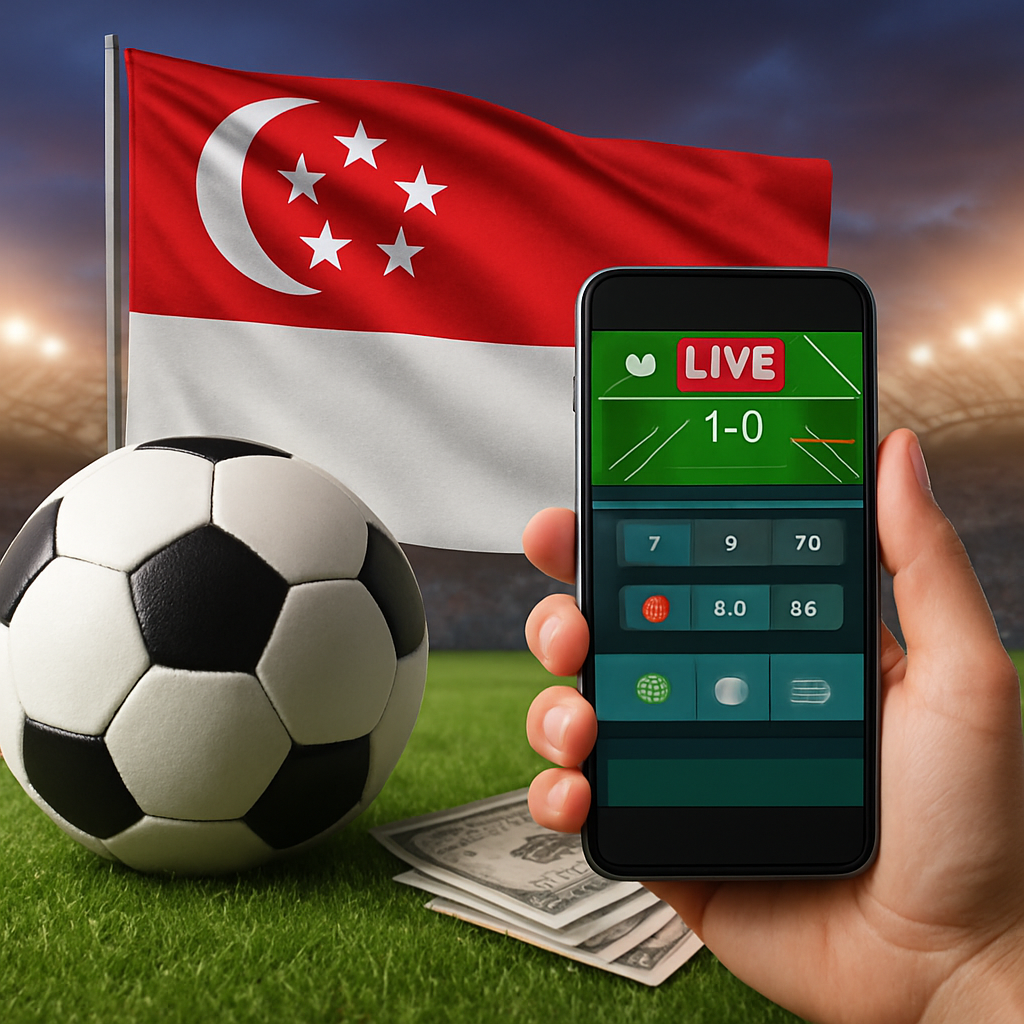
Singapore Sports Betting: Popular Markets, Betting Tips and Where to Bet Safely
If you follow football, basketball or esports from Singapore and want to turn knowledge into smarter stakes, this guide on singapore sports betting cuts to what matters. You will get a clear rundown of the most popular markets and bet types – from Premier League and IPL to Dota 2 and Valorant – practical tactics for finding value and managing bankroll, and a straightforward checklist for choosing where to bet safely. We use real examples and a factual profile of offshore operators such as GGLBET alongside the state option Singapore Pools so you can weigh odds depth, convenience and regulatory risk before you deposit.
Popular sports and esports markets for Singapore bettors
Core reality: for most Singapore punters football and esports supply the deepest markets and the best value hunting opportunities in singapore sports betting. The English Premier League, UEFA Champions League and top domestic European leagues attract the tightest lines; on the esports side Dota 2, League of Legends and CS:GO produce the most consistent liquidity.
Mainstream sports that matter
Top picks: the practical markets to watch are Premier League and Champions League football (match winner, Asian Handicap, totals), NBA (moneyline, spreads, player props), IPL and major T20 cricket (match winner, top batsman props), ATP/WTA tennis (set betting, handicaps) and horse racing through the Singapore Turf Club for local pari-mutuel options.
Why these matter: these events have two advantages — consistent odds movement you can follow, and enough market depth to use middle or hedge strategies. If you chase tiny edges in low-liquidity leagues you will lose on spreads and limit restrictions more often than you win.
Esports, virtuals and live/in-play
Esports focus: Dota 2 (The International), LoL Worlds, CS:GO (BLAST/ESL) and Valorant deliver both traditional markets and game-specific props like map winner, total kills, and first blood. Regional titles such as Mobile Legends are important for Southeast Asia because local book depth and specialised markets are more frequent there.
Live and virtual markets: live sports betting Singapore and virtual sports give fast turnover but require good data feeds. Latency, update frequency and cashout rules matter more here than pre-match odds; bad feeds create stale prices you cannot trade.
- Useful markets to master: Match Winner / 1X2 for simplicity and bankroll control
- Value markets: Asian Handicap for football and spreads in basketball, where sharper books show consistent edges
- Esports specifics: Map Winner, Best of Series, Player Props (kills/assists) — these need roster and patch knowledge
Concrete example: a practical football use case is backing Manchester City at Asian Handicap -0.5 when their expected goals metrics and lineup news show a clear mismatch; the handicap removes draw variance versus a simple 1X2 bet. In esports, a CS:GO map-winner prop is valuable when one team historically wins on a particular map and bookmakers are slow to adjust to a roster change.
Trade-off to accept: state-regulated options like Singapore Pools are legally safe but limited in esports and exotic props; offshore sites (for example GGLBET) offer broader esports coverage and live in-play interfaces, but you must weigh that convenience against regulatory and payment risks and consult GRA guidance before deciding.
Concrete bet types explained with Singapore examples
Match-winner / Moneyline / 1X2: The simplest market — pick the winner or a draw — remains the right place to start for most events because pricing is transparent and liquidity is high. For football and basketball, use 1X2 for straightforward value plays; for tennis and most esports, moneyline (win/lose) is the default. Compare prices across multiple operators to spot soft lines before you stake.
Asian Handicap – when and how to use it
Asian Handicap focuses the bet on goal/point differences and removes the draw outcome, which reduces vig and creates clearer value opportunities. If you are betting on mismatches (top Premier League side vs relegation candidate) prefer Asian Handicap over 1X2 because a -1.0 line pays better than backing the favourite to win outright at slightly worse odds. The tradeoff: Asian Handicap requires discipline around tie rules and half-goal increments – it reduces variance but can produce more frequent narrow losses when favourites win by a single goal.
Concrete example: Manchester City at home vs a lower-table opponent — the market offers City -1.0 at 1.85. If City win by 2+ goals you win full stake; if they win by exactly 1 goal you get a push and your stake is returned; if they draw or lose you lose. That push mechanic is why Asian Handicap is often more efficient than backing a favourite at lower moneyline returns.
Totals, player props and when to pick them
Totals (Over/Under) are best when you have a strong read on tempo, weather or lineup news. In football, Over 2.5 goals is a staple; in basketball, totals are often the best route because point spreads and match-ups move less with late scratches. Player props offer high edges for informed bettors but thin markets and wider vig — only use props when you can verify role, minutes and matchup changes quickly.
Use case: An NBA game where the starter is rested creates a clear minutes-prop opportunity. If a backup is projected to play +10 minutes vs their season average, that often changes scoring and assist props more than the headline moneyline.
Esports-specific markets
Esports adds map-level and in-game props — map winner, total kills, first blood, and series winner. These markets require patch and roster awareness; a team that excels on one map pool may be a heavy favourite on that map but underdog on another. Liquidity varies widely: major tournaments (The International, LoL Worlds) have deep markets; regional qualifiers often do not.
Concrete example: In a CS:GO BO3 between two EU teams, a safer play is to back a map-winner on the first map where lineups and strategies are known rather than the series winner, because in BO3 the underdog frequently takes one map and upset probability is non-trivial.
Live / in-play markets and practical limits
Live betting offers the fastest ways to find value but it is where execution matters most – latency, feed quality and cashout rules change outcomes. Small price movements happen in seconds; if the app lags or feed updates late you risk being matched at stale odds. For in-play, prefer markets with visible live stats (goals, map scores, round timers) and avoid one-minute markets unless your connection and bookmaker latency are proven.
- Practical tradeoff: Better odds vs execution risk – offshore books like GGLBET SG often publish deeper Asian Handicap and map markets, but you must accept different withdrawal and compliance processes compared with state options like Singapore Pools.
- Misunderstanding to avoid: Props are not inherently profitable just because they are niche – thin liquidity increases vig and lines can be inefficient in the house's favour.
- Quick rule: Favor totals or handicaps when news changes (lineup, weather, patch) and stick to moneyline for clean match-winner exposure in low-information events.
Next consideration: Before you place a bet, match the market to your information speed — if you can check lineups, live stats and patch notes faster than the market moves, you have a real edge; if not, stick to settled markets where execution risk is low.
Practical betting tips and strategies tailored to Singapore bettors
Start with a written plan. Before you open any app, define bankroll size, session limit and a clear stake unit. Treat the bankroll as operational cash – separate it from discretionary spending – and use a fixed-percentage approach to protect against variance.
Staking and bankroll rules that work in practice
Practical rule: use 1 to 3 percent of your total bankroll as a standard stake for single bets, and reduce the percentage for accumulators and propositions. Flat staking keeps you stable; fractional Kelly is reasonable if you track your edge precisely, but full Kelly will blow through most bankrolls in real-world variance.
Concrete example: with a 1,000 SGD bankroll, a 1 percent unit is 10 SGD. If you find a match you estimate has a 55 percent chance to win while the market implies 45 percent, place one or two units rather than upping to 10 or 20. This preserves capital while you validate your read over several plays.
Where to hunt value and how to validate it
Compare lines fast. Value comes from spotting mispriced markets relative to your model or read. Use odds comparison tools and monitor closing-line moves – a market that consistently drifts against you is not value, it is deception or poor information. Set alerts and compare Singapore betting sites and offshore books like GGLBET for differences in Asian Handicap and totals.
- Use two data sources: Flashscore for live state, and Opta or The Analyst for deeper football metrics.
- For esports: HLTV for CS GO maps and Liquipedia for rosters and patch notes.
- Check liquidity: only place live bets on markets with visible volume or tight lines to avoid slippage.
Tradeoff to accept: using multiple operators increases your ability to get the best odds, but it fragments funds, multiplies KYC tasks and raises the chance of hitting site limits. Decide whether value hunting at scale is worth the operational overhead.
Live betting tactics and mobile considerations
Wait for the first five minutes. In-play markets move fast; you will learn more from immediate game state than prematch form. For football, watch how presses and substitutions change tempo. For esports, wait for the first map to see bans, drafts or map picks before committing larger units.
Latency matters. Mobile sports betting Singapore users should test connection and app update cadence. If you plan to trade live, use the platform with the fastest data feed and smaller cashout spreads. Low-quality feeds produce stale prices and widen execution risk.
Bonus caveat. Welcome bonuses and reduced juice look attractive, but read wagering requirements. Many promotions require high turnover or restrict withdrawal methods, which can destroy short-term value for small bettors. Treat bonuses as optional leverage, not a primary reason to pick a platform.
Legal and verification consideration. Verify local compliance before depositing. For fully legal play use Singapore Pools. If you use offshore services keep in mind licensing differences and check operator transparency and payment rails; review Gambling Regulatory Authority of Singapore guidance if unsure.
Next consideration: track every bet. A simple spreadsheet with date, market, stake, odds and post-match notes is the difference between being a recreational punter and a bettor who can learn and iterate.
Where to bet safely: regulated local options and vetted offshore platforms
Short answer: use Singapore Pools for legally safe wagers; use vetted offshore sites only when you accept operational and legal trade-offs. Singapore Pools is the state-authorised channel for most sports bets in Singapore (Singapore Pools). Offshore operators such as GGLBET offer broader markets, esports coverage and SGD support, but their Curacao licence does not convert service into a legal endorsement in Singapore — check the Gambling Regulatory Authority guidance before you act (GRA).
Regulated local option: what Singapore Pools gives you — and what it doesn't
What it guarantees: legal clarity, local dispute channels and predictable payout processes. What it lacks: deep esports markets, the same live in-play depth, and many niche props. If your priority is legal protection and simple recourse for payout disputes, Singapore Pools is the practical default.
Offshore alternatives: capabilities, limits and realistic risks
What offshore sites deliver: expanded markets (deep esports, Asian Handicap lines, in-play micro-markets), mobile-first interfaces and SGD payment rails when operators support them. Example case: GGLBET is operated by Green Stream Technology B.V., holds a Curacao eGaming licence, supports SGD, and has an esports-first sportsbook and live-casino partnerships — see the platform details at GGLBET.
Practical risk: in real-world use you will sometimes face account restrictions, longer withdrawal reviews, or blocked payment rails. These are not hypothetical: enforcement actions, banking flags, or changes to an operator's licensing can interrupt access and leave you with limited legal recourse in Singapore.
Simple vetting checklist before you deposit
- Check the licence: confirm the licence number on the operator site and cross-check with the issuing regulator.
- Corporate transparency: can you find the operator company (e.g., Green Stream Technology B.V.) and a working corporate address?
- Security basics: site uses HTTPS/SSL, visible data-protection statements and optional 2FA.
- Provider partnerships: visible integrations with Evolution, Pragmatic Play Live or major platform suppliers are a positive signal.
- Payment rails and SGD: confirm deposit/withdrawal methods, typical payout times and FX handling; prefer SGD support to avoid conversion fees.
- Withdrawal policy and limits: read the T&Cs for wagering and withdrawal conditions before you top up.
- Customer support test: open a support ticket or live chat and note response time and helpfulness.
Concrete example: A bettor who wants live Valorant markets used GGLBET for map-winner props and deposited a small SGD amount via an e-wallet, enabled 2FA and set a low daily deposit limit. When a withdrawal was requested it entered a 48-hour verification hold — the support chat answered within an hour and the funds cleared after ID verification. That sequence — small initial deposit, KYC-ready paperwork and documented chat — is a practical playbook for reducing friction.
Judgment: most active Singapore bettors will tolerate offshore platforms for better odds and esports liquidity, but treat those sites as operational services, not legal guarantees. For larger stakes or anything that requires dispute enforcement, prefer Singapore Pools or keep sums offshore deliberately small and track every transaction and communication.
Next consideration: if you choose an offshore site, keep deposits small, keep KYC documents current, and maintain screenshots of terms and support chats — those records are your only practical protection if access or payments are disputed.
Checklist for vetting a betting site before you deposit
Treat the pre-deposit check as mandatory. A few minutes of verification prevents most common problems: frozen withdrawals, unclear wager rules, and surprise identity checks that block cashouts.
30‑second verification steps
- License & regulator: Look for a visible license number and operator name on the site and match it to the regulator record. If you need fully legal options in Singapore, use Singapore Pools and consult the Gambling Regulatory Authority guidance.
- Corporate transparency: Confirm the corporate entity (company name, registration jurisdiction) and an address or corporate filing. Sites that hide their operator are higher risk even if they list a license.
- Payment rails & currency: Check that the site supports SGD, lists deposit and withdrawal methods, and shows typical payout times and fees. Accepted payment methods reveal how practical real withdrawals will be.
- Withdrawal rules: Read the withdrawal page and the T&Cs for minimums, maxes, and identity checks required. Quick deposits with long withdrawal windows are a red flag.
- Odds & market depth: Open the same match on two other sites and compare odds and market range. Thin markets and frequent suspended lines indicate poor liquidity for live bets.
- Security & account controls: Confirm HTTPS/SSL, available 2FA, and KYC workflow. Sites that force KYC only at payout time increase friction and surprise cancellations.
- Customer support test: Send a payment or KYC question via live chat and email. Response speed and helpfulness are practical signals of how disputes will be handled.
- Provider partnerships & data feeds: Visible integrations with known sportsbook or live-casino providers and use of established odds/data feeds improves integrity of live markets.
- Bonuses & wagering terms: Check wagering requirements, excluded markets, and maximum bet rules. Generous-sounding bonuses can lock funds behind impossible rollover conditions.
- Responsible gambling tools: Confirm deposit limits, self-exclusion, and reality checks are available and actually functional in account settings.
Concrete example: While comparing an offshore sportsbook to a regulated alternative, a bettor found that the offshore site listed Green Stream Technology B.V. as operator and displayed typical withdrawal times of 24–72 hours. The bettor verified corporate details on the site, tested customer support with a small KYC query, and made a trial deposit of SGD 20 to confirm the real payout flow before moving larger funds.
Practical trade-off: Offshore sites often deliver deeper esports and live markets but trade that depth for weaker consumer protection and more cumbersome dispute resolution. If you prioritise competitive odds and in-play markets, accept the trade-off only after confirming fast, reliable withdrawal mechanics and clear dispute channels.
Next step: After completing this checklist, register with deposit limits enabled and place a low-stake live or pre-match bet to validate app latency, market stability and the customer-support pathway before increasing your exposure. If you want a starting point for offshore options that list operator details, see the GGLBET platform page at Singapore Sports & Esports Betting | GGLBET SG 2026 Platform.
Quick-start playbook for new Singapore sports bettors
Decide the operator and a burnable bankroll first. Pick either the state route or an offshore operator before you place a single bet, then commit a bankroll you can afford to lose and treat that as your testing capital.
Step-by-step playbook
- Choose your legal boundary. Use Singapore Pools if you want full legal certainty or select a vetted offshore site for deeper markets and esports; if you go offshore, document the licensing and payment routes you will use and accept the trade-offs.
- Register and lock limits. Complete KYC, enable two-step security where offered, and set a hard deposit and session loss limit before your first bet so emotion cannot expand your risk mid-session.
- Start with single bets only. Bet only on markets you understand for the first 50–100 stakes. Avoid parlays and exotic props until your staking returns stabilize and your recorded edge is positive.
- Use small, consistent units. Stake 1% of bankroll per bet as a baseline. Increase only when a clear, sustained ROI emerges across a statistically meaningful sample — typically 50+ bets per market or strategy.
- Track everything and review weekly. Record market, stake, odds, closing line, source of your edge and result. Compare your average odds to a comparison site and note slippage on live bets.
- Treat live betting as a separate skill. Wait 2–5 minutes in-play to observe tempo, volume and visible injuries before sizing up the market; if the app shows poor latency or large price jumps, skip live trades.
Concrete Example: With a SGD 500 testing bankroll, use 1% units (SGD 5). Place single-match bets on Match Winner or Over/Under while tracking closing lines. After 60 bets, if your ROI is positive and variance is within expected ranges, raise unit size to 1.5–2% rather than switching to parlays.
Practical trade-off: Bonuses and welcome offers look tempting but often carry heavy wagering requirements and market restrictions that mask true value. It is usually better to accept a smaller bonus you can clear in straightforward markets than chase high rollover promotions that push you into poor markets.
Start small, measure results, and only scale when your edge is proven across a meaningful sample.
Next consideration: After you complete the initial test run, evaluate whether you have structural edges — consistent closing-line value, reliable data sources, or a niche market like Mobile Legends or depth in horse racing — before expanding stakes or adding multi-leg bets. For legal guidance check GRA guidance and for a regional sportsbook example see GGLBET Singapore.
Resources and tools to follow odds, stats and esports patches
Start here: reliable, low-latency data and an odds feed you trust are the practical foundations of repeatable betting decisions. Without those two things you are guessing — not betting. Use tools that match the market you trade: fast tick data for live football and granular match-history, roster and patch tracking for esports.
Core tools and what to use them for
- Odds comparison and line trackers: OddsPortal, Oddschecker and dedicated closing-line monitors to watch arbitrage windows and intraday movement. Use them to measure closing-line value before you scale a model.
- Live stats for traditional sports: Flashscore and SofaScore for minute-by-minute events; Opta or The Analyst when you need advanced metrics for football. These affect totals and Asian Handicap pricing in-play.
- Esports data and patch trackers: HLTV (CS:GO), Liquipedia (schedules & rosters) and official patch notes pages (Dota 2, League of Legends, Valorant). Patch timing changes meta and invalidates short-term edges — treat a recent patch as a volatility event.
- APIs and automation: TheOddsAPI, bookmaker APIs and websocket feeds if you run a model or a scraper. Manual checks are fine for casual bets; anything systematic needs API reliability and rate-limit handling.
- Community signals with caution: Twitter threads, Discord roster alerts and Telegram tip channels can surface news faster, but they are noisy and prone to false leaks.
Practical insight: fast data can be a false friend. Low-latency feeds let you trade live markets, but they amplify mistakes when your execution lags or the book has thin liquidity. If you rely on mobile app cashouts, expect slippage; if you rely on websocket feeds, expect occasional drops — build checks.
Concrete example: short workflow for an esports live bet
Concrete Example: before staking on a CS:GO map-winner prop, check the matchup on HLTV, confirm recent head-to-heads and map win rates, then cross-reference odds across at least two markets on OddsPortal. If a new patch changed weapon balance or a team swapped an IGL in the last week, reduce stake or skip — the market typically takes 24–72 hours to reprice correctly.
- Pre-match: pull recent form (last 10 maps), map-specific win rates, and any roster/coach changes from Liquipedia.
- Two hours pre-match: compare odds on an odds aggregator and bookmark any significant line movement.
- Live: use Flashscore/HLTV live events to watch economy and round flow; avoid markets with sub-€500 liquidity or wild price swings.
Limitations and trade-off: the best feeds and APIs are often paid. Free services are good for manual bets but poor for model-driven or high-frequency trading; expect a subscription if you want accuracy and uptime.